
By Lexie Maclaughlin
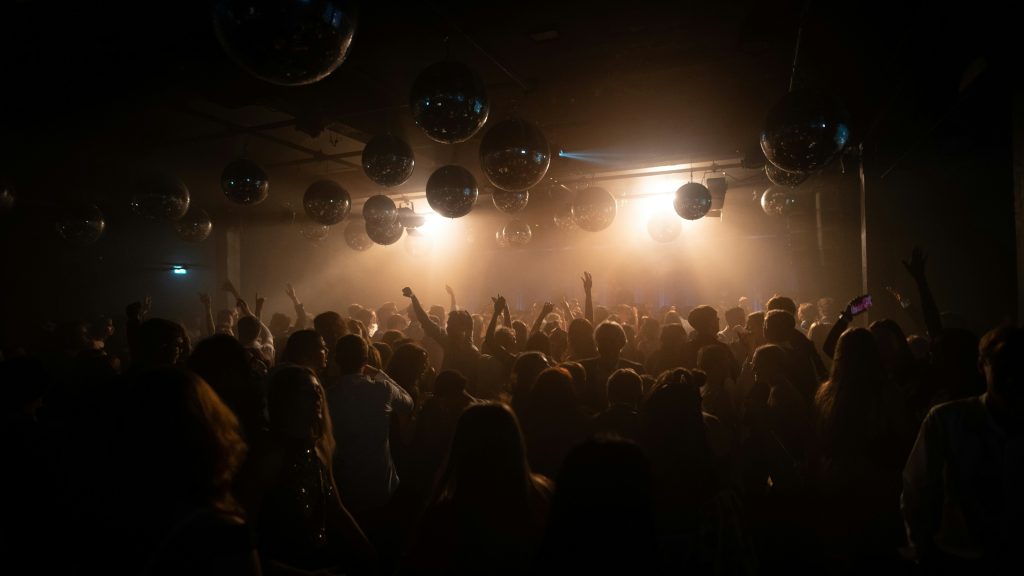
In the wake of Royal Holloway’s late-night venue Medicine closing, among others nationwide, club culture is clearly not as prevalent as it once was. However, I am a firm lover of the club and have been predicting an ‘indie sleaze’ revival for the best part of three years. Finally, in the year 2025, we are seeing a resurgence of messy club culture and hipster fashion; I think this is an overwhelmingly good sign for our generation! While ‘Brat’ summer may be the cause of this, I will view it as a cultural movement aided by fashion and hedonism. With the latter referring to the pursuit of pleasure as the singular purpose in life, embracing individualism to let loose in the club, I would argue, is the epitome of hedonism in the 21st century. Youth movements are often cyclical explaining why our generation is now looking back and wanting to mimic the indie sleaze era, which itself was a revival of 80s club culture.
The initial ‘indie sleaze’ era started in the early 2000s and died out by about 2012. Its basis was in indie and hipster subcultures, think The Strokes, LCD Soundsystem, and Crystal Castles. It was a time of radical self-expression shot through the Sony digital camera full of metallics, silly slogans, faux furs, and anything American Apparel. With music and fashion simultaneously influencing each other, the club was the place for it, where you spent time with friends and had fun – a completely hedonistic endeavour to escape the 2008 financial crash. Though the term ‘Indie Sleaze’ is an instance of historicism, coined much later on social media, it was merely groups of Millennials who were living and partying freely, unintentionally creating a club-centric movement.
The current ‘indie sleaze’ revival started with the likes of The Dare and Snow Strippers blowing up on TikTok, making the resurgence exclusively electronic in focus when formerly indie bands played a part. This shift in focus may mean people are becoming more inclined to go out and listen to the tracks of DJs who want to escape from how dystopian modern life is. With the speed trends and micro trends have been moving over the past few years, ‘indie sleaze’ is a natural progression from the Y2K-ness of the late 2010s to the early 2020s. The abandonment of the ‘Clean Girl Aesthetic’ has also influenced women to be radical and messy in their self-expression through curating the perfect edgy but eclectic club outfit. Thus, more 20-something year olds are embracing this nostalgic movement which we may remember but were too young to be a part of, hence the love of digital cameras and a casual social media presence.
While club attendance has dropped significantly within Gen Z, this movement emphasises a night of hedonism, potentially rooted in post-COVID rebelliousness or a natural progression of the ‘Brat’ era of last year. I believe that (within reason) we should embrace this frivolousness. For example, student life of heading down to the Students’ Union has a multitude of benefits like reducing stress, providing cardio, and promoting social connection. A hangover being the small price to pay. Attendance is more imperative than ever, and with themed or society nights we have the perfect opportunity; Fetish Friday is notoriously a hugely popular night due to its indulgent eroticism which the sleaze in ‘indie sleaze’ encourages.
When there is an influx of people who think they can DJ, who will be the ones to dance? Club culture should not be left behind; we should be embracing hedonistic endeavours which will be a distant memory under the burden of frontal lobe development. Hence, the ‘indie sleaze’ revival is where my emphasis resides. Unapologetic creativity and messiness are the most cathartic ways to escape academic deadlines, and clubbing is the epitome of this. So, go forth and ‘Dance Yrself Clean’!
Image: ((Kajetan Sumila) on UnSplash)