
By Mya Rogers, Editor in Chief
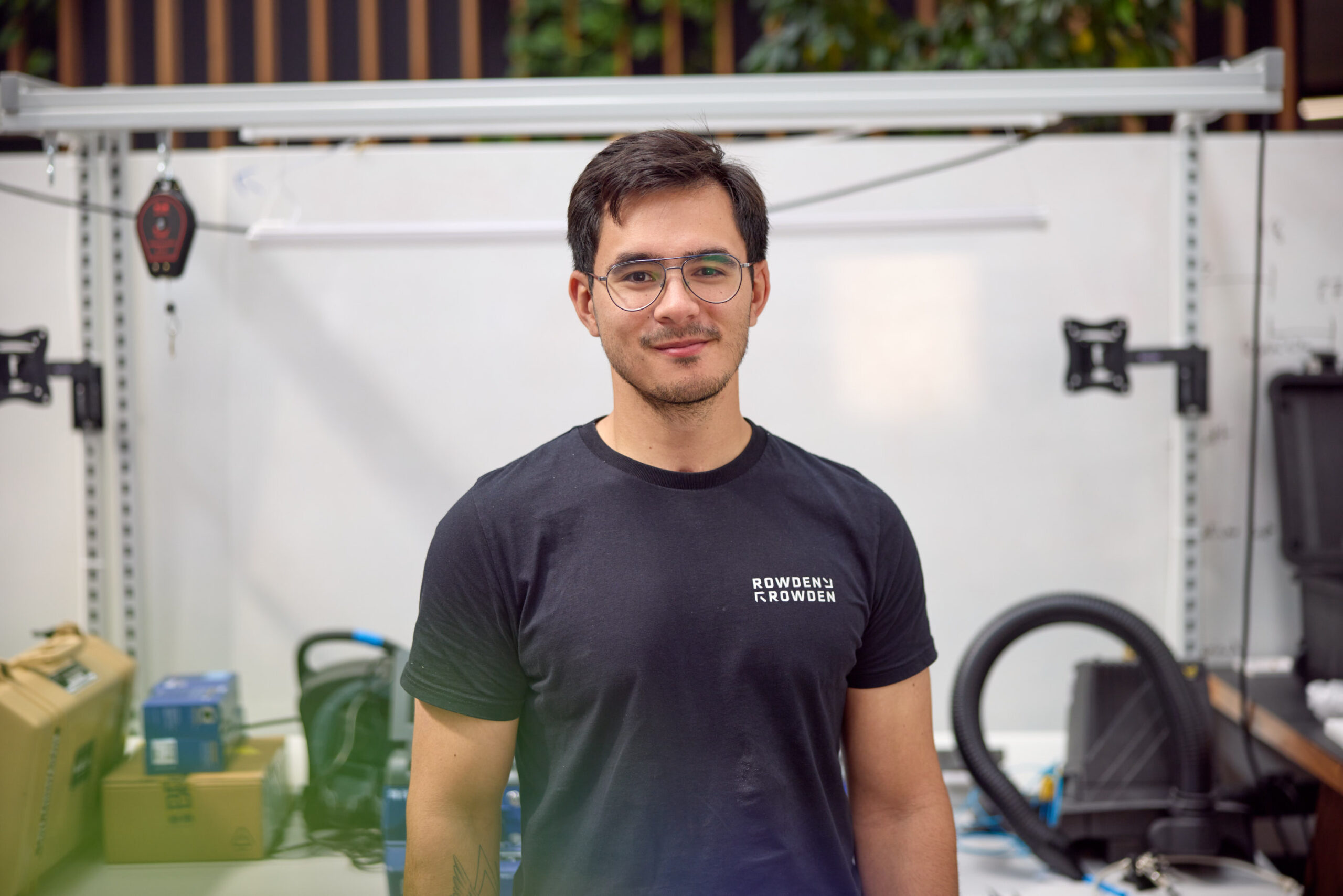
For most students currently in their final year of University, finding a job after you graduate seems not only terrifying, but also impossible. Most of us began this stage of our lives with the hope that getting a degree would help propel us into our desired career path. However, the job market is rough, and at times I question if nepotism is the only way into an industry; if so, that means I was behind in life before I even had the chance to do anything about it. So I accepted the realisation that I had perhaps gotten myself stuck in this dead-end degree, with no way to escape into the real world. That was until I had the chance to speak with Andrew Barraclough, a Royal Holloway alumni who shared his journey from studying BSc Computer Science and MSc Machine Learning, to joining Rowden’s Graduate Programme. His experience gave me hope for a future after graduation, and hopefully it’ll do the same for you!
At first, I decided to question Andrew on when he decided that this was the career path he wanted to pursue? I feel like we’re pressured to know exactly what we want to do from such a young age, and especially by the time we get to University, as if we don’t have an entire life to change our minds. Andrew was one of the lucky few who had an idea of his job from early on, telling me that: “I spent a lot of my childhood playing video games and thinking it would be a pretty good job to make them”. He went from playing them as a hobby, to joining an after-school club that gave him the opportunity to learn and study the coding behind creating these games. That enjoyment flourished into him choosing to study computer science for his GCSE’s and A-levels – practice makes perfect after all! During his undergraduate degree, Andrew also had the opportunity to work with Dyson in his placement year, where he “saw people applying it (machine learning) to computer vision and robotics, which opened my eyes to a different direction I could take”. He claims that this experience was the one that formed his decision to study Machine Learning as his master’s degree, and led him to where he is today. Therefore, I learnt that there are many different opportunities in various times of your life, that could completely change the trajectory and leave you pursuing something you never thought you would. So stop stressing if you’re not fully sure what you want to do, the time will come!
Although we are all already enrolled at Royal Holloway and can’t exactly go back on that now, I was intrigued as to how Andrew knew this was the right place for him, for both his bachelor’s and master’s degree. He originally chose to study here as it ranked highly for the Computer Science department, but was encouraged to stay when they allowed him to graduate after four years (instead of the five he initially signed up for), letting him change his degree and complete it as a standalone year for his master’s instead. The University also provided him with practical help for finding work: “I attended careers fairs on campus and lectures for Year-in-Industry students, covering placement searching and CV writing”. This confirmed my belief that I had chosen the right University because there are so many things and people available on campus or online, that can give you the tips and tricks on whatever the next stage of your life is.
Throughout my years at University, and especially now that I am in my final year, all I’ve heard people talk about is graduate programmes and the schemes they’re joining after they graduate. Yet, when I search for them myself, I seem to come to a dead-end and can’t find anything; now I’m back at square one, questioning what I’m even getting this degree for, if I can’t find anything to go into after I graduate. I can’t exactly just apply to jobs because most of them are senior roles which I don’t have the experience for. So I turned to Andrew for help with where and how to find these graduate programmes, and to perhaps prepare myself for the kinds of things they will ask me in the application process. Andrew informed me that he used the apps LinkedIn and Gradcracker in order to search for graduate programmes, focusing his search in locations that he knew he wanted to work in (he wanted to return to the South West to potentially work with the friends he made during his placement at Dyson). Connections mean everything!
Initially I had wondered if I was already too late to apply for grad schemes, as I hadn’t really been told anything about them, so I didn’t know how long the application process was, and if my window for opportunity was still open. I had been stress searching on every job app and website that I could find, applying for anything that remotely fit the job description I wanted, and just hoped for the best. That was until Andrew told me that he didn’t even start looking for programmes until the middle of second term (the spring before starting work in the autumn). So here I am, applying for things a whole year in advance, wondering why my options are so sparse, when really most don’t apply until the same year they plan to start work. It also helped that the application process for Rowden’s scheme was fairly simple, consisting of: an at-home coding exercise, an in-person discussion/interview of said coding exercise, and a group networking/communications exercise. During this process, Andrew also had the opportunity to go into the workplace’s office (to complete an assessment) which helped give a feel of where he would be working and either confirm or deny that he was fit for this atmosphere and lifestyle. I took this as a tip: try and get the chance to explore the company you’re thinking of working for, to get a taste of the role and make sure it’s everything you want. Again, it’s never too late to change your mind!
After talking with Andrew, I realised that an important factor when deciding where to apply/work after I graduate, is finding a place that still allows me to learn, alongside the job. I don’t necessarily mean an apprenticeship (although that is an option) but finding a place that acknowledges the fact that I was not long ago just a student, who might not yet know everything about the role, but has the motivation and ambition to get to know it all. Andrew appreciated this flexibility with Rowden: “There was plenty to learn, and moving between teams meant gaining experience…it has given me a lot to draw on, quite early in my career”. Really, University is all theory learning, sitting through lectures and seminars writing down all the things you must know, but your job should be practical learning, becoming more hands-on and applying everything you learnt through your degree.
Specifically, Andrew advises all final-year students to be “coachable and hungry to learn” because it will provide you with enough information and experience to help you in your career. Be hungry to learn about life: go out, make friends, complete projects together, and just do things that give you something individual and different to talk about. Be hungry to learn about your degree/job: Andrew wanted to try an infrastructure rotation that wasn’t originally part of his Rowden programme, but he asked anyway, and they made it happen. Don’t ask, don’t get!
I left my conversation with Andrew feeling much more uplifted, and looking forward to my time post-graduation, rather than fearing what lies ahead. I’ve realised that no degree is a dead-end degree, so long as you get from it what you want, and ask if you don’t feel like you’re receiving enough. My plans for the final months of my degree seem much more stable, and I feel as though my career train is finally back on the right track.