
By Ruby Peresso
Photo by Ehimetalor Akhere Unuabona on Unsplash
TW: Violence, Death
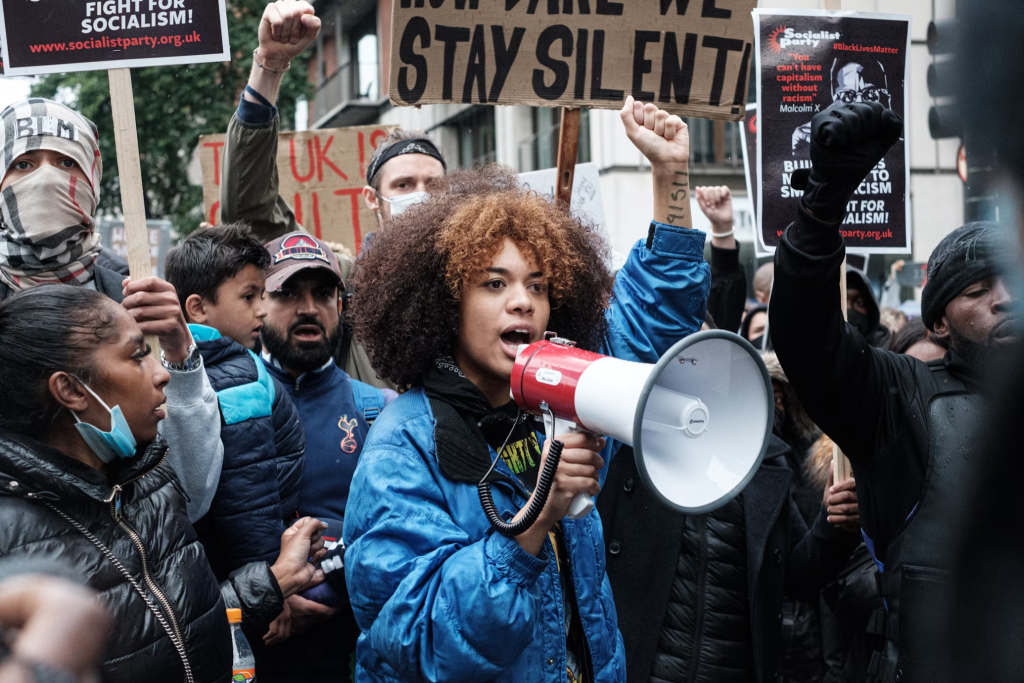
As outlined in Article 10 of the Human Rights Act from the Equality and Human Rights Commission, ‘Everyone has the right to freedom of expression’. All human beings have the freedom to speak our views in whichever way we deem best, through protests, social media, etc.
In today’s age, we are shown that acts of protest do not have to constitute crowds marching through the streets. It could be a young Greta Thunberg sitting calmly outside the Swedish Parliament with a sign that reads ‘School Strike for Climate’: A simple act that transformed into the global movement, ‘Friday’s for Future ‘, underscores how a single voice can wield so much power. But how are people choosing to use their voice in 2024?
With the rapid rise of social media platforms, most activism today occurs digitally in spaces like Instagram, X, and Facebook where anybody is able to vocalise about a matter they deem important. However, the bombardment of posts on these platforms pressure social media users to be active which leads to them posting for the sake of posting. This modern approach towards activism is done out of a desire to increase one’s public perception rather than de voting oneself to the actual cause.
Think. It is June 2020, and you have just posted a black square onto your social media platform with the hashtag ‘blacklivesmatter’. You do it as a way of standing in solidarity with those affected by the death of George Floyd. But what has this accomplished? What impact have you generated? Suddenly what you think constitutes taking a stand is now being termed controversial by news sites like NBC, as they argue that the influx of black squares buries links to petitions, charities, and black-run organisations hinders the mobility of the movement. It impacts the visibility of actual black voices.The attention has turned to the activist rather than the cause en-acting a facade of change while the stream of black squares stop painting our ‘for you pages’ black people continue to experience police brutality.
In 2024, the activist takes centre stage over the cause once again, as users began flooding their feeds with an Al generated image of Rafa. The image is of an aerial view of a camp consisting of well-organised tents, the sky blue and the clouds idyllic. In reality, the sky in Rafa is grey with smoke from Israeli bombs, the tents are burnt, the inhabitants either dead, injured, or traumatised – a far cry from what AI depicts. By sharing this image over 46 million times, testimonies, ones that Palestinian’s true testimonies, ones that Palestinian’s have been pleading to be heard for decades. The sharing of that almost idealised image of Rafa presented by Al spreads misinformation, creating an illusion that change is happening without addressing the root of the problem.
The power of the individual is something people still take for granted today. At a time when crucial, we see an influx of write in ballots coming out of voting to vote for socialites like Taylor Swift and Kanye West instead of candidates like Kamala Harris, can be a symbolic form of protest, it does not bring about tangible political change. For a vote to be valid, the candidate must be registered and have a national campaign. Therefore, for the action to be meaningful beyond just voting, it would need to be paired with efforts like campaigning for electoral reform, organising or advocating for systemic change.
What, therefore, is the way forward? The best way to generate real change is to move beyond the performative confines of the internet that does not allow substantial change, and to bring activism out into the real world. Educate yourself, conduct your own research using reliable sources such as the BBC, and form your own understanding of the crisis at hand, Go to website like change.org and sign petitions that align with your personal values, support small businesses that are minority owned as a way of reversing systemic injustices that lead to poverty, and lastly speak loud and clear for those who can not. In this ever-changing world, be a part of the change that will characterise our future!