By Nia Videnova, Staff Writer
‘My homeland, My Bulgaria!’ – are lyrics from a traditional Bulgarian song that I would hum every time I experience the blessings of my mother country. As a UK resident with a settled status and high adaptability and passion for the lifestyle here, it is surprising that I still yearn for some aspects of Bulgarian culture and traditions. Nothing can substitute the abundance of comforting home-made soups every Bulgarian home, restaurant, or café prepares daily for lunch. Or the sweetness of the mineral water that comes from the verdant mountains and you can find in hot springs both in urban and rural areas. The captivating fragrance of perfumes from Bulgarian rose farms. The unrestricted bluntness and honesty of the people that can offend you, make you laugh, or liberate you from your own etiquette boundaries. The nuance and colourfulness of the language that allows you to express anything you feel but can never be translated to English…
All this admiration could almost mask the banes of the country and convert me into a fully fledged patriot. Weirdly enough, I never identified myself as one. Neither the rosy description I provided above, nor the nationalistic educational system I received in primary and secondary school there, managed to make me fall in love with my homeland. Financial insecurity stemming from inadequate economic policies has been the norm since my early childhood. Or, take the endemic corruption and poor welfare system. Chronic bullying among teens originating from unrealistic beauty standards, sexism, and narrow-mindedness did not alleviate the challenges my homeland was generating. The mass music (chalga) that gains more popularity among Gen-Z the more it objectifies women, references promiscuous behaviour, and advertises deodorants. Getting used to the dynamic, vibrant, and multi-cultural life in London, I would barely get excited while waiting for my gate number for the flight to Sofia at Luton airport. My visits would become more tedious, exhausting, and disheartening regardless of how much I would shorten my stay every time. Sometimes, I would find myself in a limbo despising everything about Bulgaria whilst a blurry reminiscent of my family, warming dishes, and the natural landscape would torment me.
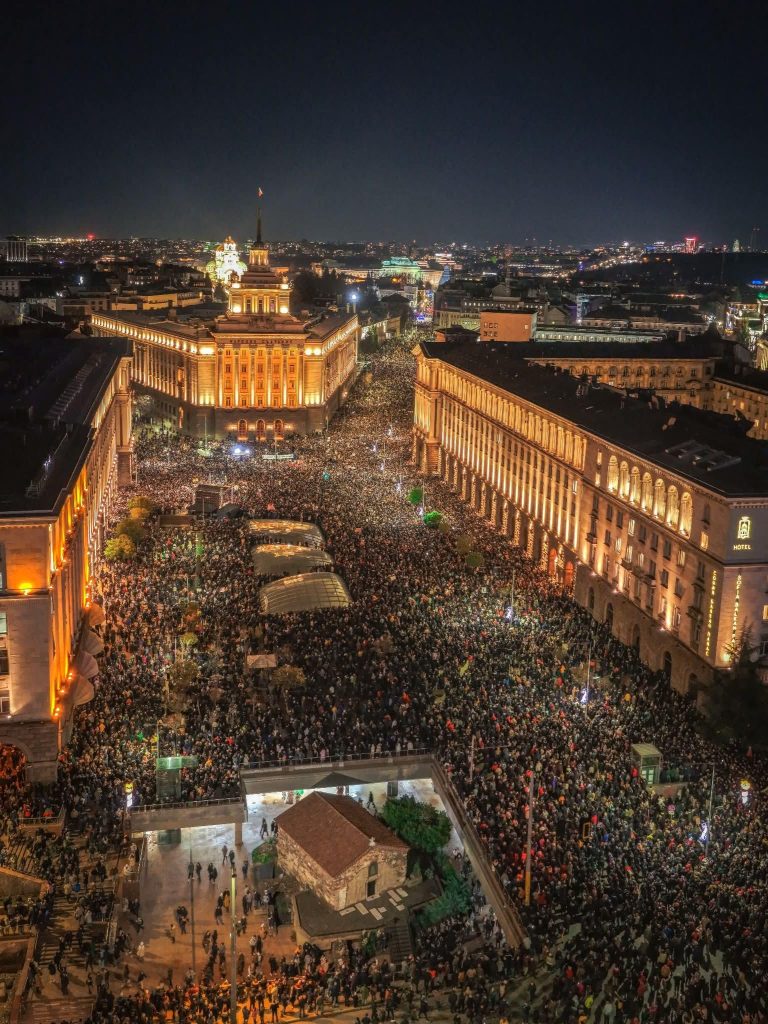
What stirred my emotions recently, were the mass protests against the corrupt government led by Gen-Z that ardently shouted ‘Resignation!’. The hundred thousand phone lights that glimmered in the December twilight like wakening stars in the centre of Sofia represented the voices of people tired of injustice, corruption, and poverty. This was the largest protest in Bulgaria in the 21st century and marked the resignation and fall of a government led by criminal politicians and moguls such as Borissov and Peevski in the backstage. Only a nation that has recently experienced a similar turmoil such as Nepal with its anti-corruption protests, could relate to the explosion of excitement and inspiration that the view of the crowd and the sound of the political chants evoked in me and other Bulgarians. Yet, this truly exciting spirit full of bravery, passion, and sensation is appealing only on the surface; the harsh reality haunts me and thousands of other Bulgarians. The slogans of the Bulgarian Gen-Z that I am allegedly part of are precipitated with a racist and homophobic rhetoric targeting the elite. Despite the ostensibly corrupt and malicious nature of the politicians and the urgency of their dismissal, I would disagree with the inappropriate language the crowd would use to trigger the deceitful moguls. Protesters from different generations would often focus on the ethnicity, sexuality, or physical appearance of the politician to inflict damage. Peevski, a pomak with Turkish roots, is often depicted as a swine who does not belong to our Slavic nation. Slanders that the corruption is led by the LGBTQ+ community have not shied away either. Furthermore, the resignation of the government would not guarantee instant prosperity for the nation considering that Bulgaria has had seven elections and chronic political instability since 2021. It has been an economic, social, and political fiasco that cannot be resolved with the powerful protests national and international media present.
Just an hour before the UK New Year, the BBC showed the celebration of some European countries among which Bulgaria was surprisingly included amongst Rome, Paris, Berlin, Athens, and Sofia…Projectors displaying the emblematic Bulgarian lev transitioned to a coin with the engravings of the European continent. On the 1st January 2026, Bulgaria became a fully integrated EU member by meeting its final criteria – adopting the euro. The public, euphorically waiting for 2026 in the UK, could have easily taken the euro-excitement among Bulgarians for granted. Few would come to know that the nation has been deeply divided over the acquisition of the euro. While only a quarter of the Bulgarian population believed that the euro should have been adopted in 2026, 40% said that they would never want it. It is fair to recognise the stance of those who thought Bulgaria was not ready for the euro but should adopt it at some point. Indeed, Bulgaria has scored as the second most corrupt country in the EU after Hungary. It is one of the poorest European nations, and the political instability in the 2020s are red flags for its preparedness to become a fully integrated EU member. Economic debates over whether adopting the new currency would bring financial prosperity or degradation have been rife. Furthermore, the acquisition of the euro was not a democratic decision based on a referendum, but purely a governmental choice.
However, these are only the justified reasons for why thousands of Bulgarians have acted irrationally after the 1st January – even a few days before the New Year, people protested against the euro; customers in supermarkets have been refusing to take their change in euros. Many are living in denial because of ignorance and misinformation spread by Eurosceptics, pro-Russians, and corrupt politicians. Bulgaria’s close relations with Russia stem not only from their similar Slavic identity and shared Orthodox-Christian religion but also from their common history. Bulgarians consider Russians to be liberators, with the Russian Empire’s role in liberating Bulgaria from the Ottoman empire, and as brothers because of its close connections with the Soviet Union. Adopting the euro has, therefore, been considered as a betrayal to the Kremlin by some. Pro-Russian parties such as BSP (Bulgarian Socialist Party) and Revival have opposed EU sanctions against Russia in response to the invasion of Ukraine.
Others have mourned the abandonment of the Bulgarian currency (lev) fearing that it will erode the country’s national identity. Diverse forms of art such as paintings with coins have been produced to preserve the cultural heritage of the Bulgarian lev. However, clinging to material symbols such as a currency cannot be a serious reason for rejecting further integration in the world’s second largest economy. Despite the uncertainties that adopting of the euro entails, the response of some Bulgarians has been groundless and ignorant.
Some could argue that pride in one’s mother country is indispensable. This is what the reading material at school in Bulgaria was advocating for. My love relationship with Bulgarian cuisine, fresh water, and language, however, could not sway me into identifying myself as a patriot who holds onto national symbols, traditions, and attitudes at the expense of progress.