
By: Jessica L. Smith, Senior Opinion Editor
2026 marks a huge milestone for Royal Holloway’s outlet of student journalism – forty years of The Orbital magazine. In light of this, I had the opportunity to interview Gen-Z journalist Lucy O’Brien in January to discuss the importance of young people breaking into the journalism industry.
Lucy O’Brien is currently a Platforms and Social Media Journalist at The Times and The Sunday Times. She runs a successful TikTok account, which has amassed over 6000 followers, where she shares snippets of her life as a journalist and advice for those pursuing a career in journalism themselves. O’Brien previously graduated with a master’s degree in Magazine Journalism from City St George’s, University of London and was the Opinion Editor for University of Kent’s student newspaper InQuire whilst studying there as an undergraduate. Last year, O’Brien spoke at a student journalism panel in Exeter, led by the Student Publication Association, and offers helpful guidance for all those who reach out to her, as well as through her insightful posts.
I spoke with O’Brien over the phone on a rainy, cold Thursday after she had just finished a 5am shift. I want to thank O’Brien profoundly for her time and for our productive, inspiring conversation.
To begin, albeit quite broadly, what does journalism mean to you?
“I think, especially given today’s social and political climate, it really is just championing voices and truth telling. One of the biggest threats to the legacy of media organisations at the moment is disinformation and social media content creation because how can you trust where your sources are coming from? How can we cut through the noise of that? So, I really think that journalism to me is a return to its core principles of telling important stories, championing unheard voices, and fighting misinformation at a point in time where it’s so prevalent. As we’ve seen, disinformation can really influence geopolitics, so journalism is about how to fight that and how to make people feel as informed, as knowledgeable, and as represented as possible”.
You’ve had an incredible time thus far on TikTok and other platforms posting your journalism journey and personal industry insights whilst also helping young people break into journalism. What inspired you to help young people navigate the industry?
“It’s so nerdy, but I knew I wanted to be a journalist when I was 16. I went to quite a poor performing state school in a low-income area, so I didn’t come from a background where people had connections to white-collar jobs. I didn’t know anyone in journalism at all and I was so dead set on it”. O’Brien describes to me how, when TikTok wasn’t a thing, she would desperately search on YouTube for help and guidance on how to get into the industry without connections. Therefore, she always knew that if she did break into the industry, she would try and be a mentor for someone else. “A lot of people have reached out to me asking for advice and I really enjoy mentorship, passing on information, and trying to break down those barriers in journalism. It’s something that has become a passion”.
Forty years of The Orbital magazine provides us with the gratifying opportunity to reflect on an outlet for young, aspiring journalists to have their voices published. Today, it is often thanks to encouraging figures like you that many people want to get involved themselves. Do you have one piece of advice for those wanting to pursue a career in journalism?
“Look at journalism from a new lens”, O’Brien suggests. For example, we shouldn’t get caught up in “the old-school way” of breaking into the industry. “Journalism no longer just means a written piece of work that goes in a print publication”. Instead, O’Brien explains to me how journalism now is diversified and comes in a large variety of forms, from social media journalism, podcasting, to video broadcast. “Don’t pigeonhole yourself into a traditional route. Always approach it from a modern point of view because journalism is going through such a change right now”. O’Brien suggests that, arguably, pursuing a career in journalism from a social or video point of view is more likely to give you fruitful opportunities. It is key that young people take advantage of the valuable skills that they typically take for granted, such as being “AI literate” and “social media savvy”, as well as an “understanding of digital tools and content creation”. O’Brien explains that “the number one priority of newsrooms is to connect and engage with the next generation of newsreaders”, which young journalists play an instrumental part in.
I’m excited to continue watching your journalism journey evolve and blossom, as well as The Orbital itself which I’m sure will see many more anniversaries. Where do you see your future in journalism taking you?
“My goal has always been to be an editor”. O’Brien describes to me how she has always seen herself on the production side of journalism, rather than being a reporter. In fact, her next role will be with The Guardian as a Deputy Audience Editor, delving into how journalism reaches people. “It’s cool that I’m starting to reach one of my goals”. Overall, she plans to work up the editorial and digital pipeline because “digital is the future of journalism, and so is social”. In the next ten years, O’Brien suggests that we will see people coming up from the social media space and taking senior roles in newsrooms because of its integrity to the future of journalism.
Do you have any final comments for aspiring journalists reading this article?
O’Brien emphasises the importance of remembering your own skills that bring to the fore your individual worth and value. “If you’re trying to get into a legacy media organisation, I know firsthand how intimidating it is to walk into a 200-year-old newsroom that has some of the most incredible journalists in the country”. She suggests that whilst you might feel intimidated by an experienced editor who has been in the industry for many years, you have skills that they could never dream of having. “You bring value to newsrooms”, O’Brien urges, “it’s important to not let imposter syndrome get ahead of you”. O’Brien reassures us that “one day, we’ll be the people running newsrooms”.
You can follow Lucy O’Brien’s journalism and mentoring journey across her social media platforms, such as her TikTok: @luc.obrien.
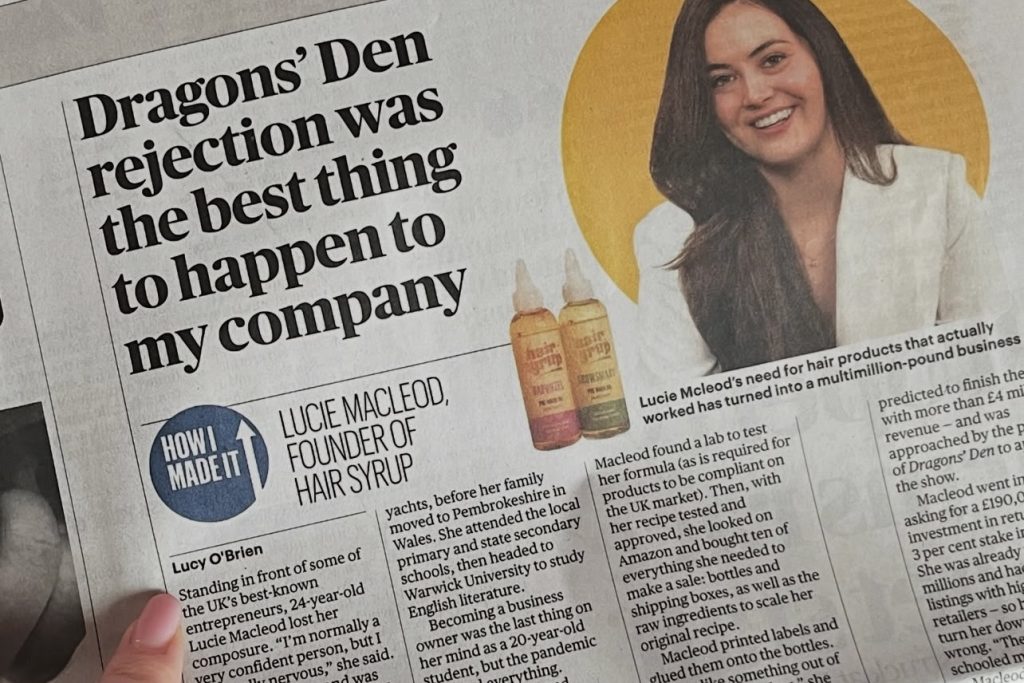
Image: @lucobrien on Instagram – Lucy O’Brien’s article in The Sunday Times newspaper.