
By Spencer Green, Staff Writer
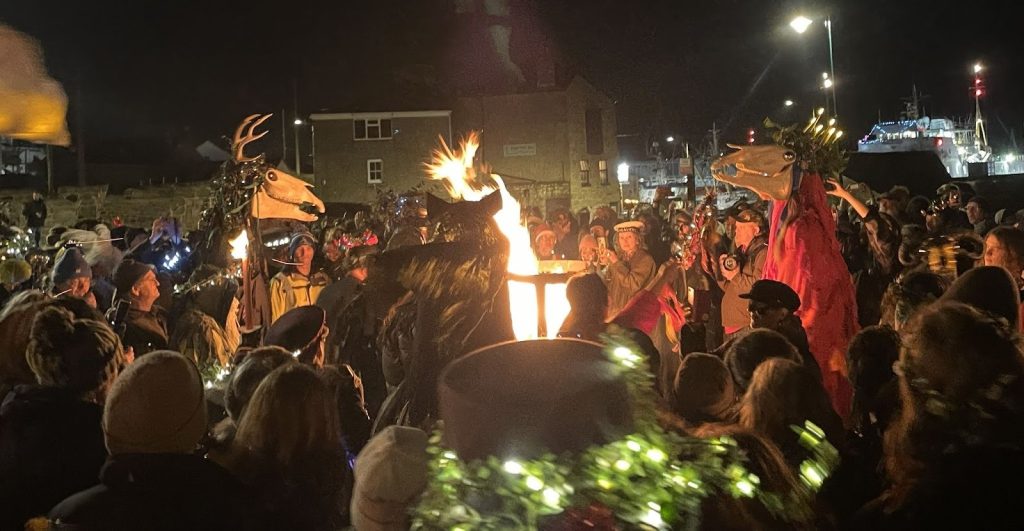
If you ever try to walk through Penzance on the longest night of the year, you shouldn’t be surprised to find the Beast of Bodmin Moor being shamed in chains through the streets, or leering skeletal horses peering deep into your soul as jingling bells echo in your ear.
As the sun sets on the winter solstice, in the town of Penzance, Cornwall, the fires are lit across the streets to celebrate the death of the year with a mystical emphasis on anonymity and disguise. This midwinter celebration began 21st December 2007 in order to revive Cornwall’s celtic roots and traditions dating back to the Middle Ages in West Penwith that fell out of place in the 1930s. The night is filled with bonfires, masked dancers, twirling fire sticks, town criers and giant skeletal creatures poking their heads atop the bustling crowds. All to bring back the sun and the light from its wintry disappearance.
The celebration takes place through the course of the longest night of the year, unlike its summer solstice counterpart, Golowan, which starts from the 21st June – the solstice – holding celebrations over the course of the week. From the afternoon, you can see various ‘Osses’, traditional horse-like figures in Cornish folklore, such as Pen Hood and Alargh Du – with its team of Osses, Maw Bras, Margh Rudh, and Borlowen to join them later into the night.
The events begin from the afternoon, starting about 2:00PM, when the sun is still about. Wild Osses and the Raffidy Dumitz Band walk through the town, drawing a bigger crowd with each street they turn. Morris Dancers stop across the road to perform Border Morris dances, which often involve using sticks and percussion alongside a loose, energetic style and painted faces and colourful outfits. This greatly set the mood for the day as people came together for the performances, a chat, or even some drinks in the local pubs and cafes of Penzance.
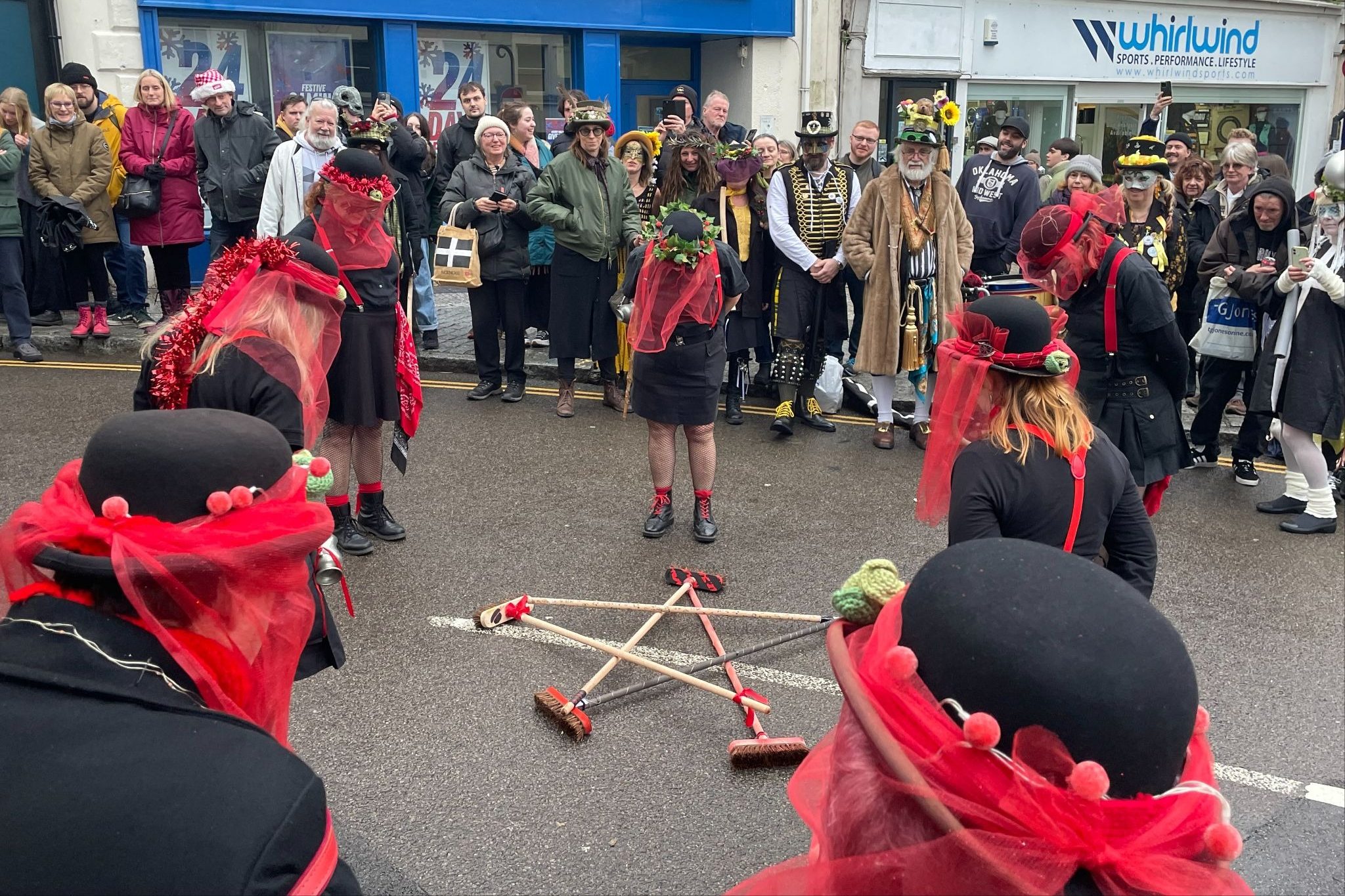
Then, as the sun finally set at 4:21PM, the Sundowner Parade was set off, marking the winter solstice. Led by the Mock Mayor – a ‘joke’ mayor selected during the Golowan festivities in the summer – they began at the top of Causewayhead, the peak of Penzance, and planned to head down to Greenmarket, covering the whole town in awe. Following this parade, the main procession ‘The Progress of the Sun’ set its course to the Princess May Recreation Ground for the Burning of the Sun event. This was led by the giant crow known as ‘Old Ned’ alongside Guise Guilds, Osses, Beasts, and musicians.
The traditions are greatly kept together by groups known as the Guise Guilds. They are a milestone of community service in Penzance as they bring life to the festivals through their dances and performances. Anyone is able to join – or even create – a Guild in Penzance, from the oldest surviving Guise Guild of the Cornmarket Revellers and the ‘Gyptians, to the Frolicking Fish Folk or the Radical Ramblers. The Guilds are all odes to their own niches that tie back to Penzance in one form or another, with the Cornmarket Revellers being based on a group of Christmas Guisers from Penzance all the way back in the 19th Century.
Despite being a winter tradition, I was shocked to find, the event is actually in celebration and a return to the sun and the light it brings. The Cornish term for winter solstice is Howlsavla Gwav, with howl meaning sun, savla meaning to stop, and gwav meaning winter. Montol directly celebrates the death of winter and the renewal of the year.
In order to bring back the sun, a large, hand-crafted sun is paraded through the streets to be burned to ensure it will come back stronger and end the dark, long nights. The ceremony – along with the entire night – was electric. With no dress code, costume creativity and expression soared through the community from jingling jesters to grassy druids. All sorts of bands blared traditional music to accompany the dancers parading the fields and streets. Line dancing found its way into the ceremonies throughout the night whenever a crowd had formed for too long, despite the sliding mud beneath our feet.
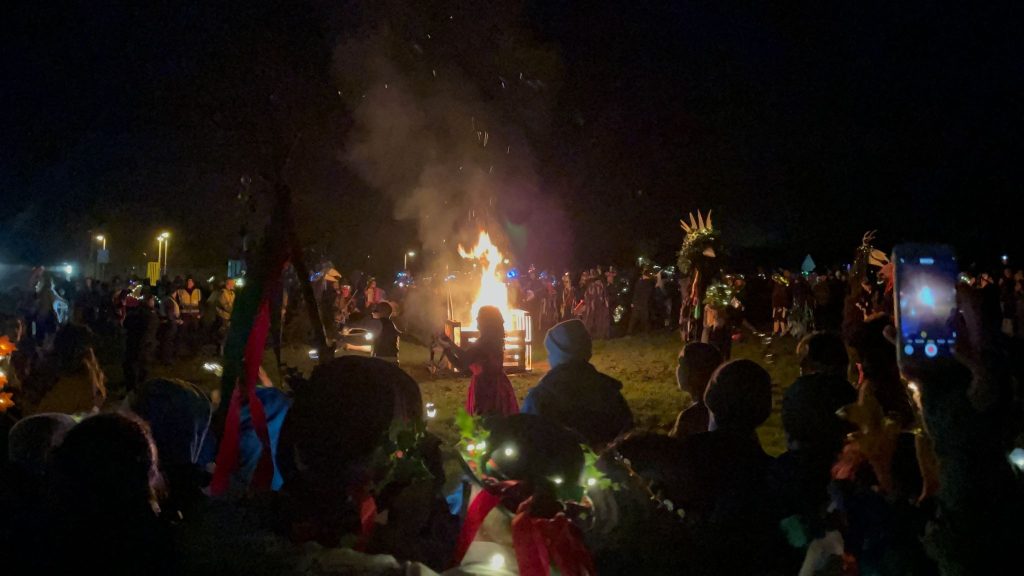
Many people, myself included, were later handed free flaming torches in a procession to bring the ‘Mock’ – their yule log – from the streets of Penzance to the seaside for the Chalking of the Mock Ceremony. On the seaside, a large bonfire awaits surrounded by Osses and musicians and dancers donned in masks and facepaint.
The procession itself was full of cheer, with people sharing flames and yelling chants to echo through the town. Then, once at the seaside, one by one we had to throw our torches into the fire, letting it grow brighter and stronger with each one. Once the final torch fell, a stick figure was marked onto the ‘Mock’ in chalk. The figure itself has multiple interpretations, some being Father Time to bring an end to the old year, or Renewal of the years. It is then thrown into the fire as the final piece as a way to throw away the past year’s regrets and fears and invite new hope in. Of course, it was followed in songs and dances of Cornish tradition. Even as I tried to leave the festival, I found myself trapped in a large serpent dance alongside a few performers trying to leave the unstable loop of charging dancing.
While Montol is an amazing opportunity to revive old Cornish traditions, the brightest part of the night is the sense of community and charity you find there. Montol, much like the Golowan festival in summer, is an event in which everyone attends. There isn’t a street you can hide in in which you won’t find someone you know from school or work or your neighbourhood. As someone who grew up in more London areas, it was both surprising and inspiring to see how closely woven and interconnected the people felt.