By Ruby Day – Senior Culture Editor
Loosely, there are two types of freedom: freedom to, and freedom from, which are distinguished as follows.
‘Freedom from’ refers to liberation from external constraints like censorship, fear of prosecution, and general protection from physical harm. To live in a state of ‘freedom from’ enables ‘freedom to’, in which individuals benefit from the ability to freely act and achieve their own goals through personal expression, autonomous life choices, and participation in democratic processes. In the UK, these distinctive freedoms live in tandem, typically permitting freedom of expression across all areas of society. In politics specifically, this concept is often prevalent as the basis for polarisation.
Music has long been a popular conduit through which the Western world engages with ‘freedom to’, boasting an extensive history of politically motivated musicians who provided nuanced social commentary in accessible and enjoyable formats. However, in recent months, it has become disturbingly clear that the space for political expression in the music industry is lessening, undergoing interference campaigns from both the UK government and the industry itself.
On the 30th of April 2025, independent record label Heavenly Recordings released an open letter on their Instagram, in which over 100 artists proclaimed that they “stand for freedom of expression”. The letter, whose signatories include well-established artists like Pulp, Fontaines D.C., and Massive Attack, makes no bones about the dangers of never questioning ‘freedom from’. It states that “in a democracy, no political figures or political parties should have the right to dictate who does and who does not play at music festivals or gigs that will be enjoyed by thousands of people”, indicating that our rights to exercise ‘freedom to’ are gradually being overridden.
This implication comes off the back of the Kneecap controversy, in which the group’s inflammatory political messaging has been labelled dangerous and amoral. To their fans, Kneecap are thrillingly rowdy and subversive, giving a voice to the oppressed in the underground scene. After recently hitting the mainstream, public attention has brought Kneecap not only the somewhat-mandatory scrutiny but active governmental intervention: the group have been actively discussed in the House of Commons, gig footage is being assessed by counterterrorism police, and venues and festivals are dropping them from their lineups. To many, Kneecap resemble political activism at its worst. The point at which freedom of expression crosses the line into promoting anti-social behaviour, rather than inciting positive change. This controversy has invited the age-old question of whether music artists truly have a duty to speak out against the oppressions of the modern world, making full use of their public platforms either through music itself or external activism.
Whilst Kneecap are at the extreme end of the scale, our subconscious reliance on ‘freedom from’ seems to have lulled mainstream media into a sanitised, complacent state. Politics and art have become mutually exclusive. When they do combine, we are hit with the sociocultural equivalent of a nuclear fallout. The Heavenly Recordings letter highlights the irrelevancy of actively agreeing with Kneecap’s political views, instead emphasising that “it is in the key interests of every artist that all creative expression be protected in a society that values culture”.
To what extent are we to blame for the decline in freedom of expression, or ‘freedom to’? In many ways, ‘freedom to’ has been taken for granted; having personal and political agency is rarely perceived as the privilege it is. Undervaluing ‘freedom to’ has affected the ways in which we engage with mass media, rendering experiences like listening to music and concert-going as passive escapism from real world issues. The self-preservation tactic of modern media consumers, separating art from artist to avoid confronting moral complexities, has enabled such passivity. It is important to recognise that whilst listeners are free to draw such lines, it isn’t always applicable to do so. In some cases, it is impossible.
This belligerent categorisation between music and politics has been attacked in recent months, providing a wakeup call to the ways in which expression in the music industry has changed for the worse. It’s a well-established concept that to make something taboo increases its desirability and appeal. By limiting political voices in non-political arenas, doubt has been introduced as to how much ‘freedom from’ we still receive, begging a change in how much we value and exercise our ‘freedom to’. Living in a “society that values culture” necessitates a conversation with the taboo and the uncomfortable; a vital conversation that, once begun, is hopefully long-lasting.
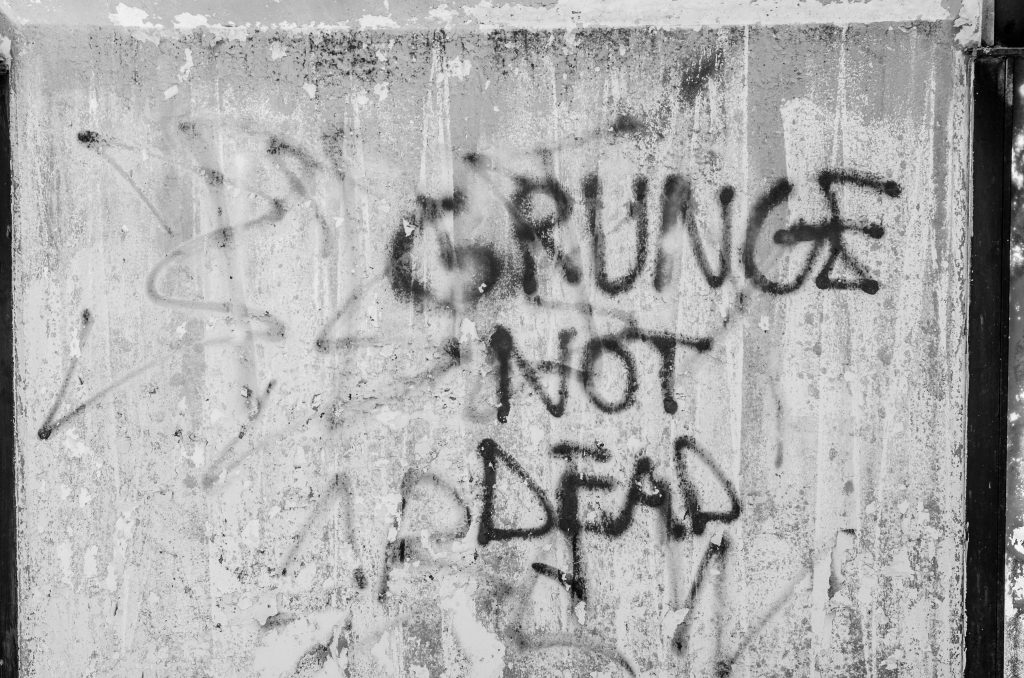
Image via Jose Antonio Gallego Vasquez on Unsplash