By Lily Gregory, Senior Agony Aunt
Even from the ancient times, witchcraft existed and was considered powerful. In Ancient Greece, we have figures like Circe, Medea, and the goddess Hekate. Their stories are found in several male-dominated myths and stories, such as Homer’s Odyssey and Jason and the Argonauts by Apollonius of Rhodes. Some say that Zeus himself, king of the Greek pantheon, would not argue against Hekate. Her power, as well as the power of other witches from her time, couldn’t be denied.
But from the 15th century onwards, after the Witch Hunt that took place across Europe and Northern America, ideas towards witches and paganism turned sour. Nursery rhymes became common amongst the youngest members of our societies to warn them of the witches. Moving into the modern age, witches can often be presented as having green skin, a black cat, and a wooden broom. Of course this isn’t true, but the depictions continue.
What ideas can be found looming around Royal Holloway? To find out, I spoke to Royal Holloway’s Witchcraft and Occult society about their experiences on campus.
Why do you believe that more people are turning to Paganism and Witchcraft?
Viviane told me about the cyclical popularity in Witchcraft.
– In the 50s when people were interested in contacting their loved ones who had passed or were at war,
– In the 60s in the US due to counter-culture hippie movements,
– In the 70s in the UK with the introduction of witchcraft-based media + the rise in neopaganism and Wicca, spearheaded by Gerald Gardner and co.,
– In the 80s with the satanic panic,
– In the 2020s, it was covid where people began to try something new in a time of hopelessness,
In addition to TikTok, more resources became available and allowed people from all over the world to delve into Witchcraft. There was, and still is, a desire by younger people to get back to community-lifestyles. Witchcraft seemed to flow with this natural lifestyle, as people began eating seasonally and working with herbs more frequently. Moreover, witchcraft gave environments for women to be seen, heard and understood in a way that other cultures and religions might not do. Whilst turning to big religions in times of need is common, it is also just as common for people to turn to their own spirituality and minor religions, such as Paganism.
So really, it’s about finding yourself when you feel lost, and finding people who can guide you forwards.
Do you believe that Witchcraft can be political, and if so, how and why?
Folk magic, as Viviane told me, comes from the lower classes and minorities. Ceremonial magic was traditionally found in higher classed, typically male dominated, and often leaned to the right of politics. The type of magic most known to people is Folk magic. “This kind of explains why those two groups are so different, and why folk witches are usually more politically involved: minorities are always more committed towards reclaiming and changing their situation for the better… sharing knowledge in and of itself is a political act”.
Kim wanted to remind everyone that history has been written by colonists and euro-centrists who have written out, destroyed, and demonised the practices of witches, pagans, and spiritualists for “CENTURIES”. Thanks to teaching and social media, witches are presented as bad and evil things, so creates an “’otherness’”.
The society has seen an increase in numbers this year, especially for events such as Tarot and Tea. Why do you think that is?
The resounding idea coming from the committee was that they wanted the society to succeed. Having a community for those engaging in Witchcraft and Occult practices was so important to everyone I spoke to. It was in a session last year for Valentine’s Day where there was a boom in attendance, and this is where Tarot and Tea first began.
But overall, the society has boomed this year. Viviane told me that the Witchcraft and Occult fresher’s fair stand was extremely popular, which is always a good sign. Getting people to talk, building a safe environment, and a fresh start in 2025/6 has allowed this society to grow.
Do you think Royal Holloway has become more open to the Witchcraft and Occult society, especially since it was first ratified?
From the committee’s’ point-of-view, things on campus have not always been the best. Viviane joined the committee in 2024 (and is now the Vice-President), and Kim in 2025 as the Treasurer; they told me that they have only been on the committee a short time, but their experiences are similar. As a minority on campus, they tell me they do deal with hardship and troubles from people. “We still get weird looks or weird asks: ‘can you guys teach me how to put a spell on my ex so he can come back to me’, ‘oh so you guys worship the devil and sacrifice babies?’” are some of the comments they have received by students on campus.
Both Viviane and Kim also expressed concerns about their interactions with the Student Union at Royal Holloway, saying that they feel as though there may be a bias against them from the staff. “We still have a lot of trouble communicating with the SU (Student Union). I know this is a widespread problem, but sometimes it almost feels like they’re tragetting us in particular”. As Kim said, it is always the “what-if?” that hurts the most.
But both say how rewarding and amazing the Witchcraft and Occult community is; “our society feels like a family” says Kim, and Viviane told me that all the members are “lovely, kind and interesting”.
After speaking to the Witchcraft and Occult committee, I wanted to understand how a wider range of students at Royal Holloway felt about witchcraft. So, I put out a questionnaire to gauge people’s true feelings. Below are the questions and a few answers, and I hope they are as informative for you as I found them.
Question 1 – When you think of Witchcraft, what words come to mind?
Some people said: spells, potions, rituals, whimsy, and empowering. While others said words like: hexing, and ‘ideologies of evil’. Immediately, I knew the results of this questionnaire would be filled with mixed ideas.
Question 2 – Where do your ideas about witchcraft come from?
For this, I gave several options to choose from and gave respondents the option to give their own. My list included: literature (fiction and non-fiction), movies, TV, music, personal experiences, and childhood games and/or nursery rhymes. Unsurprisingly, the most popular options for this were movies and literature; it makes sense that people’s first thoughts about witchcraft involves Macbeth and a stereotypical witch’s hat. A common ‘other’ option was the role of social media.
Question 3 – Have you ever engaged in Witchcraft?
Astonishingly, 60% of people who responded to the questionnaire said yes, and over 6.5% of respondents said that they hadn’t but wanted too as well. Clearly, there is a strong community for witchcraft at Royal Holloway.
Question 4 – Have you ever spoken to someone who engages in witchcraft?
Given the high percentages to question 3, it might not shock readers to know that over 86% of respondents said yes to engaging in witchcraft.
Question 5 – How do you think witchcraft, and people who engage in witchcraft, are perceived?
As with the first question, responses were mainly negative and filled with emotions. One person said that they think witchcraft has changed from being “taboo to something cooky and unserious”. Another person said witchcraft is “trivialised”. The rise of conservatism online and the continued demonisation of witches in the media, as some pointed out, hasn’t helped. But someone else said opinions are changing over time with an increasing number of people turning to the craft.
So clearly there are a lot of varying opinions on campus about Witchcraft and the Occults. Perhaps this is not surprising, as witchcraft can sometimes be a controversial topic. The Witchcraft and Occult society at Royal Holloway was ratified in 2018, so may not be as old as The Orbital, but beliefs are changing, and places like Salem in Massachusetts have come to appreciate witchcraft more. Could Royal Holloway be the UK’s Salem, or the new Hogwarts? Given the responses from the questionnaire, I say no. But witches aren’t just for Halloween; they are for life.
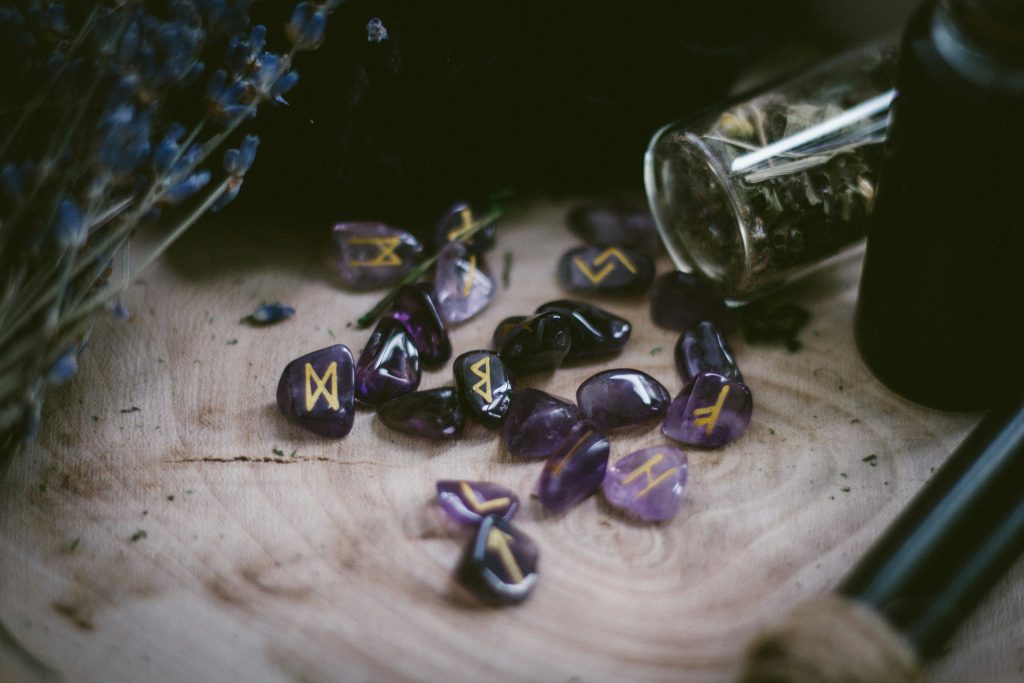
Image by Ksenia Yakovleva on Unsplash