
By Aspen Ironside, Staff Writer
Recently, I watched the 2006 film Factory Girl – a biopic about Edie Sedgwick that follows
her move from California to New York, and subsequent status as one of Andy Warhol’s
muses (aka ‘superstars’). Previously, I was only vaguely familiar with Edie Sedgwick,
usually through the form of referential make-up worn by models in Vogue. But upon
watching Factory Girl, I found myself totally enamoured by her, and wanted to learn more
about her life. This experience made me question why some people are so naturally magnetic
to us as human beings.
Andy Warhol and Edie Sedgwick represent what one typically imagines an artist-muse
relationship to be. The muse (Sedgwick) quickly becomes the subject of many works of
art–for Warhol that was often films–and becomes synonymous with the artist, thus propelling
them into the spotlight like never before. Yet, this can come with immense caveats. Once
you’ve been condemned to ‘muse’ status, it can be hard to be seen as anything else. Because
Edie Sedgwick was so renowned for her striking beauty and fashion sense, people began
reducing her to her appearance alone. She expresses this in a quote from a 1965 interview, for
the film Ciao! Manhattan (1972):
“I had to wear heavy black eyelashes like bat wings, and dark lines under my eyes, cut
all my hair off, my long dark hair, cut it off and strip it silver and blond. All these little
manoeuvres I did out of things that were happening in my life that upset me; I’d freak
out in a very physical way. and it was all taken as a fashion trend.”
When researching Sedgwick I found out she had previously studied sculpture, and that some
of her paintings were sold at an auction in November 2022. This brought a sombre feeling as
it’s clear that she was a highly talented artist in her own right. I see her as so much more than
just one of Warhol’s ‘superstars’; this label is indicative of the disposable nature that the label
of ‘muse’ tends to suggest. I believe that Sedgwick carried immense artistic prowess,
something that is apparent through her iconic eye make-up, but also in her emotional honesty
and complexity.
Before Sedgwick’s fatal drug overdose in 1971 at the age of 28, she contributed significantly
to the storyline of her final film, Ciao! Manhattan. The film is semi-autobiographical and
follows Sedgwick’s time at the Factory through 1960s archival footage, alongside a
reminiscent commentary from Sedgwick in the 1970s reflecting on her experiences. Ciao!
Manhattan was a clear turning point in Sedgwick’s filmography, as it was one of the first
times where she was given narrative control on a film she was starring in. This shift in
dynamic gave Sedgwick more power, creative control, and perhaps gave her strength to move
on from her past with Warhol, building a new public identity.
Ultimately, Sedgwick serves as a reminder that we place too great of an emphasis on the
auteur. We should perhaps seek to look at the people surrounding the auteur, and the
contributions that they provide. Sedgwick’s presence is one that most people have
encountered, likely without explicitly knowing it – there are countless songs written about
her, including the Velvet Underground’s ‘Femme Fatale’ and Bob Dylan’s ‘Like a Rolling
Stone’. While Sedgwick’s life was all too brief, her prevailing influence and intrigue in our
modern day proves that she contributed so much to both fashion and art.
I hope by writing this article it will encourage other people to research Edie Sedgwick and
appreciate the art she brought into this world.
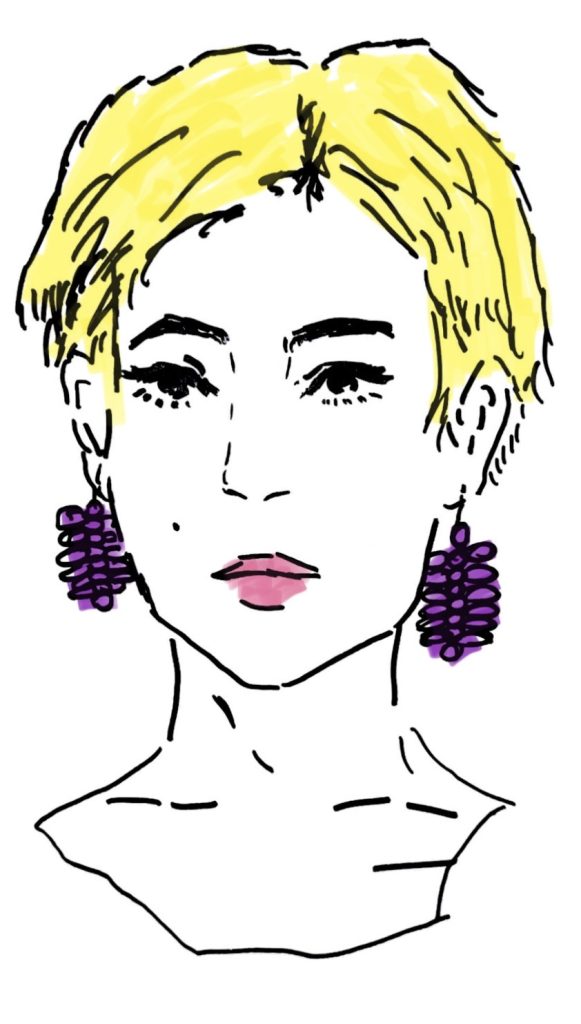
Illustration by author