
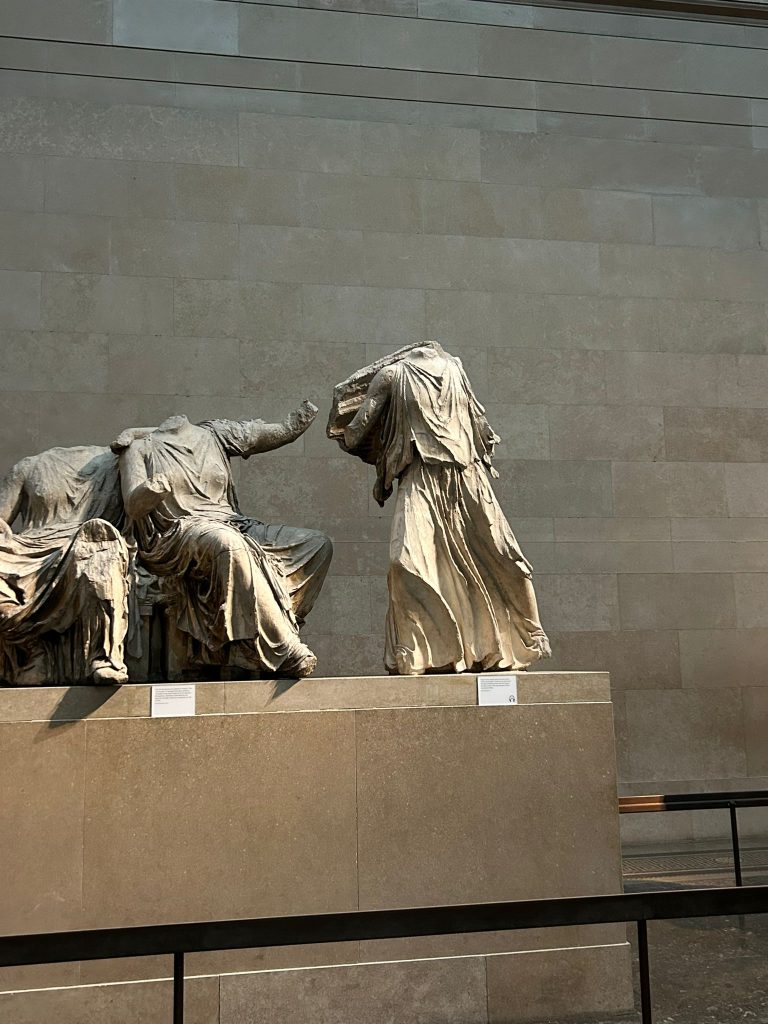
By Ruby Day, Deputy Editor-in-Chief
In the spirit of honesty, I feel comfortable admitting that nothing boils my blood quite like being asked what the use of my history degree is. It’s been assumed countless times that the only feasible career I could pursue is that of a secondary school history teacher. Whilst I have endless admiration for the profession, without my own secondary school history teacher I would be a very different person today, the idea of regurgitating facts about Weimar Germany to a class of largely apathetic 14-year-olds leaves me cold.
Whenever the presumption is made that a return to GCSE-level history is on the cards for my future, I often bite my tongue for fear of looking like a mega-nerd, holding back the extensive and shower-rehearsed monologue I could deliver about how history is so much more than facts and dates and Eurocentric narratives. Thankfully, the Royal Holloway History Department, in collaboration with the Conflict, Violence and Terrorism Research Centre (CVTRC), has recently proven that the past is alive and kicking in our contemporary world, by welcoming a chief voice in the ongoing ‘Monuments Debate’ to speak on the 25th of November. Dan Hicks, professor of Contemporary Archaeology at the University of Oxford and Pitt Rivers Museum curator, delivered ‘Every Monument Will Fall: A Story of Remembering and Forgetting’, a talk that inspired me to get over myself, and verbalise some of that long-repressed monologue.
Our cultural institutions, museums, universities, etc, need consistent re-evaluation and interrogation. The idea that history is an immovable discipline of dusty archives and impenetrable encyclopaedias is remarkably narrow minded, and one shaken off within the first five minutes of an undergraduate lecture. The past is in constant dialogue with the present; the historical discipline serves as the mouthpiece by which the two communicate. A dominant narrative within such dialogues is the ‘Monuments Debate’, a hotbed of controversy concentrated on whether certain statues and monuments should be removed, or kept and, crucially, contextualised. Some monuments are testimony to oppressive and cruel legacies, risking glorification of negative past practises. To remove them, however, is also considered risky. Arguments spearheaded by phrases like ‘censorship’ and ‘erasing history’ make the case for such monuments to remain where they are, as cultural touchstones for accessing and dissecting the complexities and flaws of the past.
The problem is delicious in its insolubility. Professor Hicks’ talk was upfront about this; the debate has been raging for decades and has many more to go before a resolution is even conceptualised. Advertised as “tracing the origins of contemporary conflicts over art, heritage, memory, and colonialism”, Professor Hicks delivered on revealing how enduring, uncomfortable legacies are “hardwired into the heart of our cultural institutions”, legacies that are in desperate and insistent need of reappraisal. What also struck me—hard, in the chest—was how the process of remembrance and reconciliation can be one of hope. It is the very fact that the Monuments Debate is unresolved that pushes history to the forefront of sociocultural developments. There isn’t a ‘wise’ old man cooped up in a medieval library dispensing the facts here. There are, instead, cutting-edge, dynamic exhibitions like Hew Locke’s What Have We Here last year. There are new areas of study, of interaction, of understanding, in constant, frenetic overdrive.
I want to thank Royal Holloway for providing a space in which a small element of this messy, impassioned debate could play out. In contributing to a startingly contemporary historical study, it was a triumph. In proving to both myself, and those who want to pigeon-hole history students to the same-old static syllabus of secondary education, it was revolutionary.
Image by Ruby Day