

Tuesday, June 23Royal Holloway's offical student publication, est. 1986

Science & Technology

A Year Of Gaming In 2017
Science & Technology

A Year Of Gaming In 2017

What better way to wade into the new year than by taking a seat atop the imaginary mountain and looking back on the gaming world of the last year. In terms of an overall outlook, 2017 was one great year for the industry, but not without its low points. Let’s take a look at both the upsets and the glorious moments. Some unexpected ventures Let’s get the negatives out of the way first, shall we? Sadly, certain titles of 2017 failed to live up to their hype, falling victim to the infamous loot box and micro-transaction plague. While the situations are being revised, the community’s thoughts surrounding the monetisation depth of titles like   Star Wars: Battlefront 2 and Destiny 2 are ones which, are fearful of the future. Going into 2018, let’s hope the combined voice of the players and...

Social Psychology in The News
Science & Technology

Social Psychology in The News

What is it? SPIN is a new discussion group formed of students and lead by Dr. Samuel Fairlamb. The group meet up once a month to talk and debate about current issues in the news and cultural trends from a social psychological perspective. Started this academic year, the group is always on the lookout for fresh faces, keen to put their stamp on the latest news stories surrounding Social Psychology! Who is in it? The students in SPIN range from first years to master’s students. Although predominantly Psychology students, everyone in the group has a keen interest in Social Psychology and its various applications to current news stories and today’s cultural trends. The group is run by Dr. Samuel Fairlamb, a Postdoctoral Teaching Associate in the Psychology department, who completed...
Rewriting Physics
Science & Technology

Rewriting Physics

One of the most commonly used phrases in the news about physics is: “the discovery that could rewrite physics”, or at least words to that effect and this got me wondering; does it take a discovery to rewrite physics? Can we only think again if we find what we were looking for? Or do we truly have to think of something new if we don’t make this discovery? What happens if what we were looking for wasn’t there, does this mean that the Universe is more boring than we thought, or is it just vastly more complex than we could even imagine? In this article I shall endeavour to convince you that the fun really starts when we get everything wrong. Our Universe is governed by some unique set of laws that are more wacky, more ridiculous than you could ever intuitively think of. The fact is, not a s...
Heavens Above
Science & Technology

Heavens Above

Already this year the Moon has been at its closest point to the Earth. Known as the perigee, the Moon’s closest approach to the Earth occurred on January 2.  This is fairly common, but was made more exciting by coinciding with the full moon, making the moon appear a bit brighter and larger. Two full moons will occur in January, and in March as well. When this happens it is known as a ‘blue moon’. Just before dawn is an excellent time to see some visible planets in January. On January 6, Mars and Jupiter are visible together just above the Southern horizon; perfect for if you’re just leaving the pub! On the January 17, there will be a new moon meaning no moon in the sky, making it perfect conditions for observing the Andromeda Galaxy, the nearest galaxy to our own Milky Way and the la...
Why WiFi?
Science & Technology

Why WiFi?

Child Development, a respected journal of Psychology, published a paper in May of this year claiming that WiFi is linked to autism. The paper was written by Cindy Sage and Ernesto Burgio and was published in a section addressing technological risks. UK national media unfortunately picked up the story, with an article in The Daily Express asking the following question: Could wireless technology be causing MAJOR health problems in your children? Obviously, this is a ridiculous notion as there has never been any evidence that found developmental health risks linked to technology in this way. The original review and the subsequent article stated that “wireless mobile phones, laptops and tables could be causing major heath problems in children and contributing to autism and hyperactivi...
Step into the mind of young Stephen Hawking
Science & Technology

Step into the mind of young Stephen Hawking

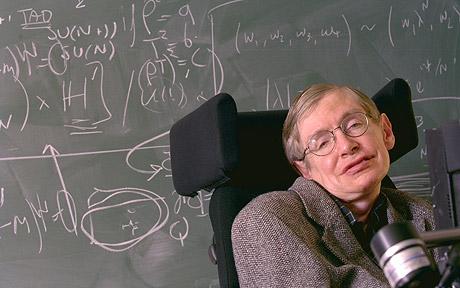
Stephen Hawking, perhaps the most famous living scientist in the world, was born on the 8th of January 1942. After a first degree in natural science at University College Oxford, he moved to Cambridge in 1962 where he completed his PhD studies. By 1963 he was diagnosed with motor neuron disease and given two years to live. He’s now 75 years old, communicates using a single cheek muscle attached to a speech-generating device, and he continues to work and lecture internationally. His doctoral thesis “Properties of expanding universes” was published in 1966 and was released online on October 23rd. Whilst it is now available online for everyone to read, it might not be your preferred bedtime story. “By making my PhD thesis Open Access, I hope to inspire people around the world to look up at...
Online Gaming: Redefining Social Interaction
Science & Technology

Online Gaming: Redefining Social Interaction

Over the last two decades, the world that surrounds the gaming industry has expanded undeniably, often leading the way in social and technological developments. Often, there has always been a negative stigma associated with gaming and young people, where people feel that playing video games deprives you of social interactions. In today’s society, the phrase ‘social interaction’, has a complex definition, particularly with online gaming communities providing their own take on what it means to express yourself socially. So, does gaming really have an effect on mental health? Online gaming communities are paramount to exploring this question, with multiplayer gaming being at the very forefront of the games industry, its social impacts are hard to ignore. Millions upon millions of people sh...
MCM London Comic Con: An Event Round Up
Science & Technology

MCM London Comic Con: An Event Round Up

MCM Comic Con Expo 2017, a place for gamers, cosplayers and pop culture lovers to let their hair down. If you have never heard of it before, MCM is the place to celebrate nearly everything surrounding pop-culture, from bagging yourself some exclusive memorabilia to dressing up as your favourite anime character. The expo was in the London Excel arena this October and here is a quick round-up of the event! If its merchandise you’re looking for, then MCM was the place to be, everyone had something to offer, from international conglomerates to the individual market sellers. Most notably, Game had their own pop-up store, selling all your favourite titles, console accessories and brand merchandise. Funko, the makers of the popular Pop-Vinyl toys, also had a professional set up, with exclusive...
International Dark Matter Day
Science & Technology

International Dark Matter Day

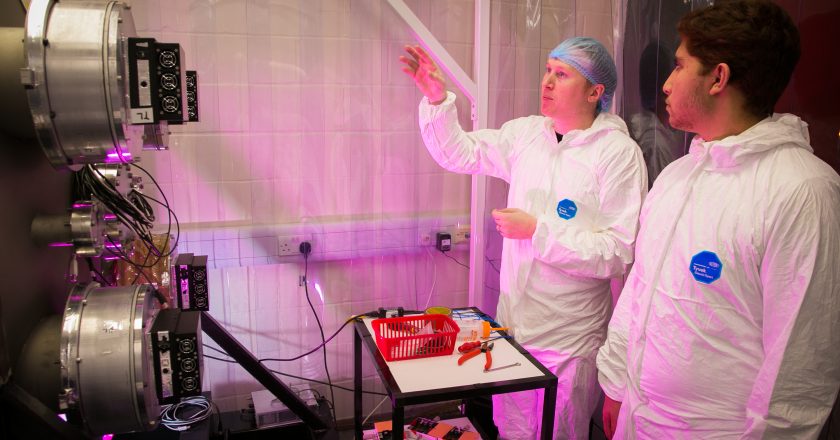
On Monday 30 October, the Physics Department at Royal Holloway celebrated International Dark Matter Day 2017 with an evening of events. The event was hugely attended, with more than 500 people registered online and Windsor Auditorium packed for the evening’s first event, a lecture given by Dr Jocelyn Monroe. With dark matter now estimated to make up a quarter of the matter in the universe, the theory was first proposed in the 1930s when the observed rotation speeds of nearby galaxies was found to be too fast to account for the visible mass of the stars and planets them. Confirmation of its existence came in the Cosmic Microwave Background in the 2000s and even more recently in observations of gravitational lensing – where light in bent around some huge invisible mass and a magnified ima...
There’s something wrong with the Sun!
Science & Technology

There’s something wrong with the Sun!

Something is wrong with the Sun! It seems that the Sun has lost 1500 times the mass of the Earth, and no one quite knows why! There is a hole in our knowledge of the Sun, and we don’t know what fills it. This is an important problem not just because the Sun is the source of our heat, and ultimately life on Earth, but it is in fact what we base most of our understanding of stars on. If we have the Sun wrong, then we’ve probably got every other star in the night sky wrong too! It is thought that our Sun is mainly comprised of light elements such as hydrogen and helium, which are the source of our star’s nuclear fusion (the bringing together of two light nuclei to make heavy nuclei). However, along with these two light elements are some heavier elements such as carbon, nitrogen and iron, w...