
Monday, June 8Royal Holloway's offical student publication, est. 1986

Culture

Edie Sedgwick: Redefining the Muse
Culture

Edie Sedgwick: Redefining the Muse

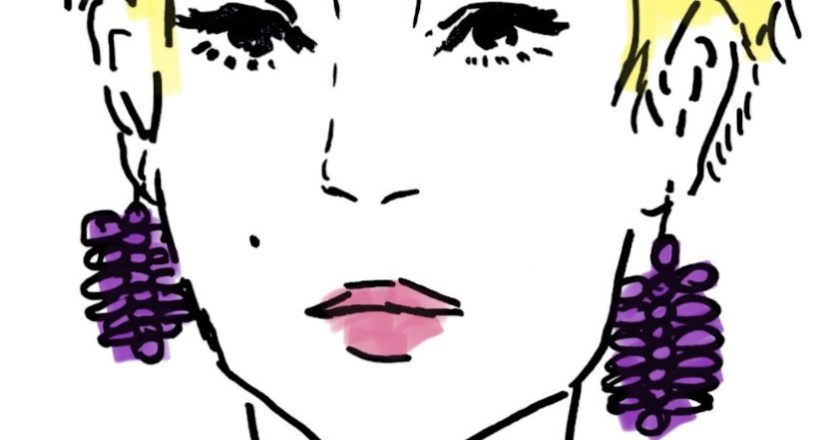
By Aspen Ironside, Staff Writer Recently, I watched the 2006 film Factory Girl – a biopic about Edie Sedgwick that followsher move from California to New York, and subsequent status as one of Andy Warhol’smuses (aka ‘superstars’). Previously, I was only vaguely familiar with Edie Sedgwick,usually through the form of referential make-up worn by models in Vogue. But uponwatching Factory Girl, I found myself totally enamoured by her, and wanted to learn moreabout her life. This experience made me question why some people are so naturally magneticto us as human beings. Andy Warhol and Edie Sedgwick represent what one typically imagines an artist-muserelationship to be. The muse (Sedgwick) quickly becomes the subject of many works ofart–for Warhol that was often films–and becomes synonym...
Our Back To School Favourites
Culture

Our Back To School Favourites

By Isobel Carnochan & Suhana Limbu, Senior and Associate Culture Editors  With our first break of the year creeping closer and closer, deadlines looming and readings already stacking up, it's easy to forget just how recently we were all on summer break. It was not too long ago now that most of us began moving back to Egham (apologies to our dear commuting readers), and even more recently that the academic year started up once more.  With this in mind, let Suhana and I take you through our pop culture favourites for back to school season… -          Isobel  Film and TV Suhana’s film of choice: Matilda (1996) A struggle that I find myself having during the back-to-school period is maintaining an undoubtable passion for my degree. Let’s f...
Luvcat, Or a Tradwife Gone Wrong
Culture

Luvcat, Or a Tradwife Gone Wrong

By Isobel Carnochan, Senior Culture Editor With the autumn chill beginning to creep back in, my days are growing darker, my wine becoming redder, and my playlists getting spookier. This is, of course, abetted by the gloomful soundtrack of Luvcat’s discography. Sophie Morgan Howarth, performing with her band under the stage name Luvcat, rose rapidly to fame in the summer of ’24, quickly releasing her first single Matador that July. Two months later, her second single ‘He’s My Man’ was released, and remains her most played song on Spotify since. A year on, fans have been blessed with a new rendition, featuring world renowned poet John Cooper Clarke - and even more sultry, vicious sleaze than before.  Following in the footsteps of My Chemical Romance, Luvcat’s songs all retain a s...
Brooding, Gothic, and Celestial: Ethel Cain Live in London
Culture

Brooding, Gothic, and Celestial: Ethel Cain Live in London

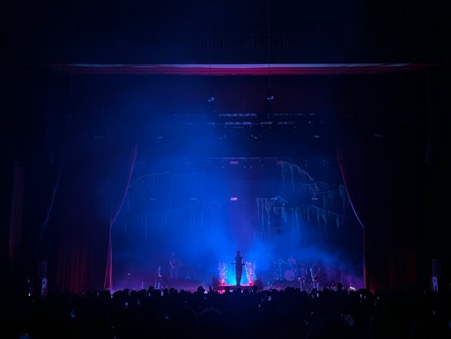
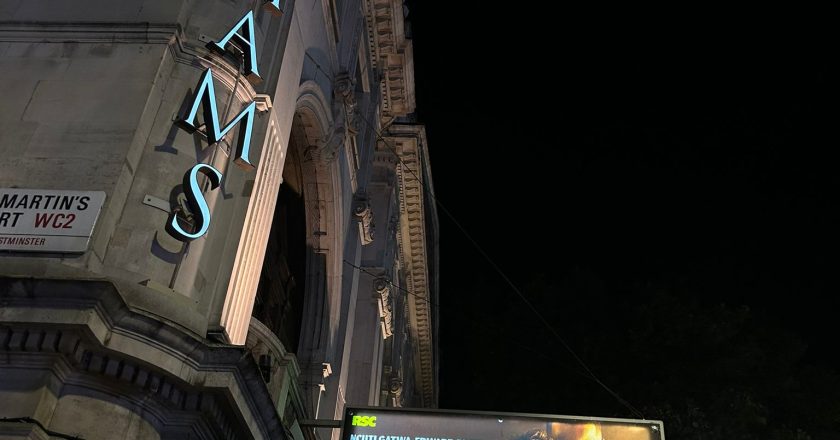
By Jessica L. Smith, Senior Opinion Editor To say that attending an Ethel Cain concert is a religious experience seems cliché. Cain, or, to use her real name Hayden Anhedönia, has constructed a musical career under the pseudonym of a character facing religious trauma, questions of faith and a loss of innocence. It would be ludicrous for Anhedönia’s live shows not to feel sacred. There’s something celestial about a congregation of concertgoers, wearing a multitude of camouflage, white vintage dresses, and rosaries that align with Anhedönia’s carefully curated aesthetic, who are simply honoured to be in her presence.  Anhedönia’s stint of five shows at Hammersmith’s Eventim Apollo brings the anticipated ‘The Willoughby Tucker Forever Tour’ to London. After the success of Anhedöni...
‘Paris, Texas : 40 Years On’
Culture

‘Paris, Texas : 40 Years On’

By Alex Robson- Senior News Editor ‘L'homme est une idée, et une précieuse petite idée, dès qu'il tourne le dos à l'amour.’ (Man is an idea, and a precious little idea at that, the moment he turns his back on love.) -Albert Camus Wim Wenders’ chef d’eouvre, ‘Paris, Texas’ (1984), is a deeply powerful reflection of man. Overcome by loss, guilt, and isolation, our protagonist, Travis (Harry Dean Stanton), must return to an equally dissociated and ever-changing Los Angeles to rediscover his family. As a prominent Euro-American picture, its plot becomes poetry, a protagonist lost in the vast, roseate and unchanging desert; a moving portrait that quickly resembles a Burroughs novel. It is both an ode to a time passed and a love letter to the importance of human interaction in an ...
Freedom To and Freedom From: The Changing Expressions of the Music Industry
Culture

Freedom To and Freedom From: The Changing Expressions of the Music Industry

By Ruby Day – Senior Culture Editor Loosely, there are two types of freedom: freedom to, and freedom from, which are distinguished as follows. ‘Freedom from’ refers to liberation from external constraints like censorship, fear of prosecution, and general protection from physical harm. To live in a state of ‘freedom from’ enables ‘freedom to’, in which individuals benefit from the ability to freely act and achieve their own goals through personal expression, autonomous life choices, and participation in democratic processes. In the UK, these distinctive freedoms live in tandem, typically permitting freedom of expression across all areas of society. In politics specifically, this concept is often prevalent as the basis for polarisation. Music has long been a popular conduit through...
The Inevitability of Change: Death Through the Eyes of Didion
Culture

The Inevitability of Change: Death Through the Eyes of Didion

Photo Credit: Jan Kahánek via Unsplash By: Kiera Garcia - Associate Culture Editor To get me through this new period of life, as a final year student, the works of Joan Didion have been my scripture. Recently, searching for a novel that would help me accept the coming changes, I turned to The Year of Magical Thinking. The Year of Magical Thinking consists of journal-like entries from Didion as she processes the year after her husband’s sudden death. The immediate change that comes from this event, as well as the changes that she faces throughout the following year, are explored in an almost circular fashion.   The first thing that stuck out to me about Didion’s account of her grief was her tendency to repeat phrases throughout the book, bringing the reader back to the s...
Five Things We Learned at the 2025 London Book Fair
Culture

Five Things We Learned at the 2025 London Book Fair

By Ruby Day and Kiera Garcia – Culture Editors The Orbital’s Culture Section was lucky enough to be invited to this year’s London Book Fair. Taking place in the spectacular Olympia Exhibition Centre in Hammersmith, the LBF is an annual event for the many moving parts of the publishing world to interact with each other face to face. For us as student journalists, the experience was eye-opening, to say the least. Varying from revelatory talks on publishing ideologies to the more realistic personal interactions, here are the five things we took away from the 2025 London Book Fair. The Talks: what did the LBF want us to learn? One main takeaway, clearly communicated by the London Book Fair, was that the publishing industry is becoming more inclusive by working to amplify diverse vo...
Don’t Count Your Pomegranate Seeds Before They Grow: Changes in Blame in Adaptations of the Myth of Hades and Persephone
Culture, Culture & Literature

Don’t Count Your Pomegranate Seeds Before They Grow: Changes in Blame in Adaptations of the Myth of Hades and Persephone

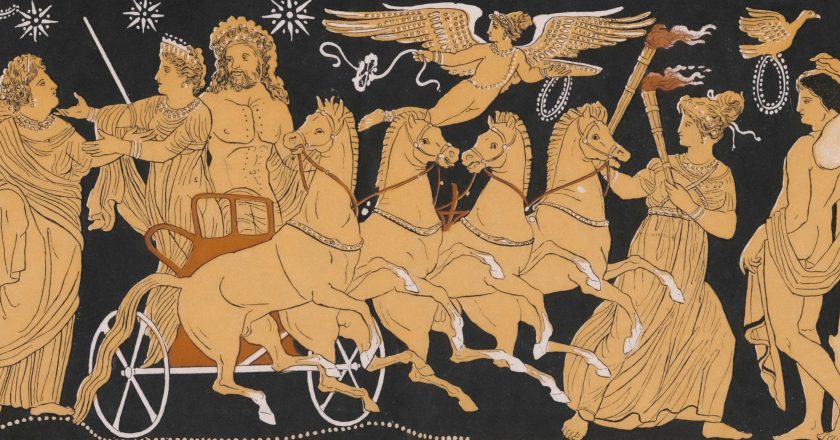
Before the symbol of the pomegranate fades completely into the background, no longer a faux-quirky image to wear on your person or to be used instead of a red heart as the emoji which you like messages with, I feel it is best to reflect on the myth of Hades and Persephone.The ‘Homeric Hymn to Demeter’, the oldest version of this myth, is the basis for later adaptations. In the hymn, Zeus allows Hades to steal away Persephone as she is picking flowers. Her mother Demeter senses Persephone is gone and travels to find her. Demeter is led to the all-seeing sun charioteer, Helios, who tells her that “no one else among all the immortals is responsible except the cloud-gatherer Zeus himself” and that Hades will be an advantageous son-in-law. Demeter refuses to see any of the gods and disguises h...
Stolen Glances and Silent Judgments: When Portraits Stare Back
Culture, Visual Arts

Stolen Glances and Silent Judgments: When Portraits Stare Back

Art is created to be looked at. And if art is created to be looked at, then walking into a gallery, you believe yourself to be in control, the one doing the seeing. You are stoic, perceptive, confident in your power as a consumer, lover, and judge. This façade breaks, however, as the further you walk down the corridors, the more you realise you are not alone. For every set of painted eyes you meet, you feel them looking right back, unflinching, unblinking. You came as the observer. Yet by the time you leave, it’s hard to shake the feeling that you were the one being observed all along. It’s as if they are aware of your presence. And worse—they might be judging.  Across history, the gaze captured within paintings has held a unique power to stir emotion and provoke reflection. Take ...